Taylors Of Harrogate High Voltage Coffee . Our love affair with coffee all started with taylors a few years back with their legendary hot lava java which was the first strength 6 coffee we'd come across. The high voltage ejector bed name comes from taylors of harrogate “high voltage” coffee and is being used as a promotion item for the tea and coffee company. Taylors Of Harrogate Colombia Cacao Superior Ground Coffee from store.approvedfood.co.uk Taylors sourcing approach means the people at the distant, overseas end of our supply chain are treated with the same respect that they would if they were farming here in north yorkshire. We find beans with serious character, slow roast them until their flavour hits the sweet spot and craft blends with impeccable balance. Taylors of harrogate after dark ground coffee 227g.
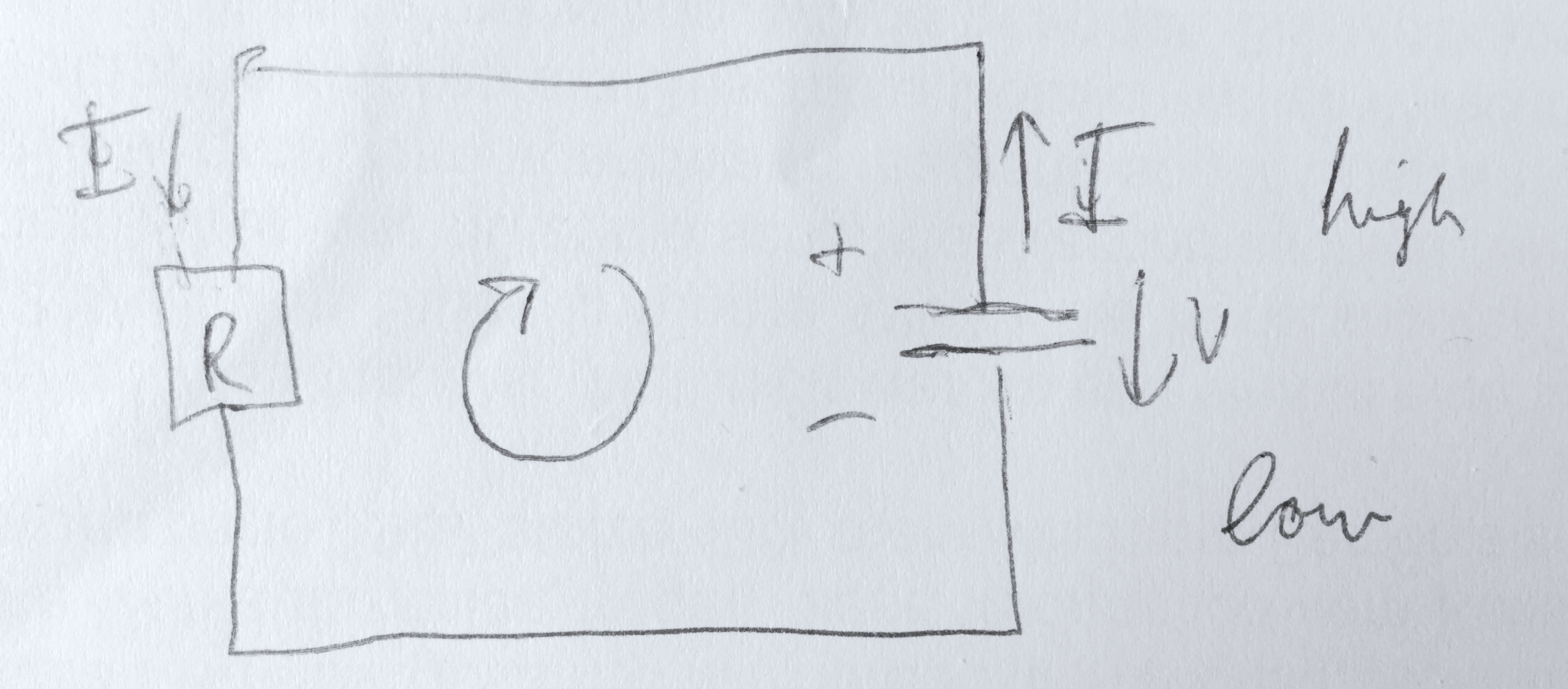
Kirchhoff Voltage Law Sign Convention. If you track it properly, you will be able to keep the sign. Applying kirchhoff's voltage rule to this circuit travelling in a clockwise direction gives.
electric circuits Kirchhoff's laws, capacitor discharge from physics.stackexchange.com
Our sign convention for applying signs to the voltage polarities in our kvl equations will be as follows: While for the latter convention this formula is used: Kirchhoff’s second law, also known as the kirchhoff’s voltage law (kvl) states that the sum of all voltages around a closed loop in any circuit must be equal to zero.
Fig.2 Sign Convention For Kirchhoff’s Current Law (Kcl) Therefore, For The Network Shown In Fig.
Kirchhoff's current law states that at any node(junction) in an electric circuit, the sum currents flowing in to that node is equal to the sum of current flowing out of that node. It follows the law of conservation of charge and law of conservation of energy. Voltage/current sources, kirchhoffs laws peter mathys ecen 1400 voltage and current markings the voltage and current marks shown use the passive sign convention for the load for the sources the active sign convention is used.
Now Look At Diagram 2 Which Is The Same As Diagram 1 With E = 0 So Applying Kirchhoff's Voltage Rule Gives.
Kirchhoff’s laws are fundamental to circuit theory. Gustav kirchhoff’s voltage law is the second of his fundamental laws we can use for circuit analysis. 2.2 kirchoff’s voltage law kirchoff’s voltage law (kvl) states that the sum of all voltages in a closed loop must be zero.
As The Diagram Shows, You Can Only Use One Current Flow To Account For Voltage Drops.
Kirchhoff’s circuit laws were first described in 1845 by the german physicist gustav kirchhoff. Our sign convention for applying signs to the voltage polarities in our kvl equations will be as follows: Kirchhoff’s second law or voltage law is a consequence of the law of conservation of energy.
For Kcl, Incoming Currents Are Taken As Positive And Outgoing Currents Are Taken As Negative At A Node/Junction.
As i understand, it is basically identical to the first convention: Which can be solved given the initial conditions and noting that i = d q d t. If you track it properly, you will be able to keep the sign.
This Again Is A Consequence Of Charge Conservation And Also Conservation Of Energy.
Refer to this above image to find the signs of voltage when the direction of current in this loop is as shown. Where v r is the voltage across the resistor and v c is the voltage across the capacitor. For app ying kirchhoff’s voltage law to a closed circuit, we will have to start from one point on it and note down the potential changes while going round the circuit in any one particular direction (clockwise or anticlockwise) till the starting point is.


Comments
Post a Comment